
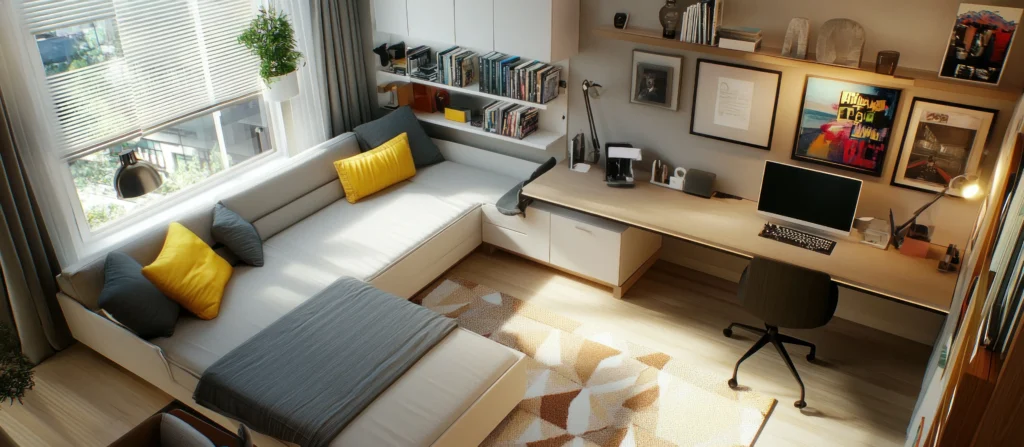
Small homes are common across Thailand. Condos, townhouses, and compact villas are part of daily life, especially in cities and coastal areas. Limited space does not mean limited comfort, but it does mean design choices matter more.
Many homeowners try to make small spaces look bigger by copying ideas from photos or trends. At first, these designs may look clean and modern. But after living in the space, problems appear. Storage feels missing. Movement feels tight. Rooms feel busy instead of calm.
Small space interior design done right is not about tricks. It is about planning. When design supports daily life, small homes can feel comfortable, functional, and easy to maintain.
- Layout Matters More Than Decoration
In small homes, layout is everything. Even small changes in layout can make a big difference in how a space feels.
Poor layouts create tight paths and blocked movement. Furniture competes for space. Rooms feel smaller than they actually are. These problems cannot be fixed with decor.
Good small-space design starts with clear movement. Entry paths are open. Walkways feel natural. Each area has a purpose. When layout works, the space feels calm even without extra square meters.
From experience, the right layout often makes a small home feel larger than a bigger home with poor planning.
- Furniture Should Fit the Space, Not Fight It
One of the most common mistakes in Thailand homes is choosing furniture that is too large. Sofas feel deep. Beds feel oversized. Tables leave little room to move.
In small spaces, furniture should support movement, not block it. Slim profiles, clean lines, and proper scale matter more than style alone.
Multi-use furniture works well when chosen carefully. Storage beds, built-in seating, or compact dining tables can add function without clutter. But too many flexible pieces can also feel messy.
The key is balance. Every piece should earn its place.
- Smart Storage Keeps Small Spaces Calm
Storage is critical in small homes. Without it, clutter builds fast. Many homeowners underestimate how much storage they need.
Good small-space design hides storage naturally. Built-ins use vertical space. Under-bed storage stays accessible. Cabinets fit into walls instead of sitting awkwardly in rooms.
Storage should be easy to reach. When storage is inconvenient, people stop using it. Clutter appears again.
From long-term observation, homes with well-planned storage stay comfortable longer, even as daily life changes.
- Light and Color Shape How Space Feels
Light plays a big role in small homes. Poor lighting makes spaces feel tight and uncomfortable. Too much harsh light makes rooms feel cold.
Good lighting uses layers. General light, task light, and soft accent light work together. Natural light should be protected, not blocked.
Color also matters. Light tones help spaces feel open, but too much white can feel flat. Warm neutrals often work better in Thailand homes because they match the climate and lifestyle.
The goal is not brightness. It is comfort.
- Design Should Match Daily Living in Thailand
Small homes in Thailand support specific lifestyles. Shoes at the entrance. Frequent cleaning. Open kitchens. Indoor-outdoor living.
Design that ignores these habits often fails. Spaces feel impractical even if they look good.
Good design respects how people actually live. Entry areas are easy to clean. Materials handle heat and humidity. Spaces feel relaxed, not forced.
From experience, homes that match daily habits feel easier to live in and age better over time.
Final Thought
Small space interior design is not about making homes look bigger than they are. It is about making them work better.
When layout is clear, furniture fits, storage is planned, and daily habits are respected, small homes feel comfortable and calm. Good design removes friction from everyday life.
In Thailand homes, where space is often limited, thoughtful planning matters even more. The best small spaces are not crowded with ideas. They are shaped by clarity and purpose.
That practical, people-first approach defines the work of Triumph Design and Construction—because small spaces deserve smart design, not shortcuts.